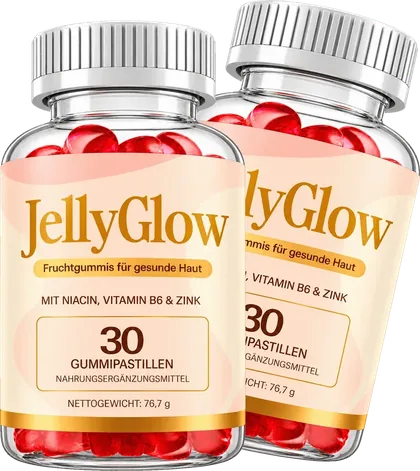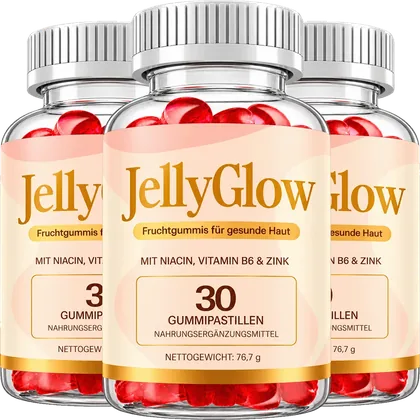
JellyGlow Gummies and multivitamin products can overlap, because the gummy carries niacin, vitamin B6 and zinc, and many multivitamins list them too1.
One gummy is modest on its own. The question is the total from everything you take in a day. This page shows the label amounts next to the NIH limits, walks through a simple worked example with made-up numbers so you can see how the sum works, and lists what to ask a pharmacist. We are an independent information site, not the seller. Nothing here tells you to stop or change a product you already take. It shows you how to read your own labels.
01What does it mean to take JellyGlow Gummies with a multivitamin?
It means you are taking two products that may both supply the same nutrients, so your daily intake of niacin, B6 and zinc is the sum of both labels, plus food.
The NIH upper limits are set for total intake from supplements, not for one product at a time2. A gummy that is below a limit and a multivitamin that is below a limit can still add up past it. The seller page says the gummies are not a substitute for a varied diet3, and a multivitamin is not either.
The label tells adults to take one gummy once a day and not to exceed the recommended dose1. Our how to use page covers the directions in full.
02How do JellyGlow Gummies amounts compare with NIH upper limits?
Each of the three vitamins and minerals in one gummy sits below its NIH upper limit, and the gap is the room a multivitamin would use up.
| Nutrient | Per gummy1 | NIH upper limit for adults |
|---|---|---|
| Niacin (nicotinamide) | 25 mg NE | 35 mg a day from supplements2 |
| Vitamin B6 | 2 mg | 100 mg a day in the US; 12 mg in the EU's 2023 opinion4 |
| Zinc (zinc citrate) | 1.5 mg | 40 mg a day5 |
Niacin is the one with the least headroom. At 25 mg NE a gummy already uses most of the 35 mg limit, which is why the NIH niacin page matters here.
03What does a worked example look like?
Add the label amounts in the same units. A made-up example shows how fast niacin can pass its limit.
Suppose a multivitamin panel listed 20 mg of niacin. That figure is invented for this example only; read your own label. One JellyGlow gummy at 25 mg NE plus 20 mg is 45 mg, which is above the 35 mg upper limit for supplements2. The same exercise for B6 and zinc usually leaves plenty of room, but you still do the sum.
- Write down the niacin, B6 and zinc per serving on each product.
- Convert so the units match (mg, and NE for niacin).
- Add the figures and compare with the limits in the table.
- Bring the result to a pharmacist if the total is close to or over a limit.
Remember hair, skin and nail products and B-complex tablets count too. So do fortified foods and drinks, though the NIH upper limit for niacin applies to supplements, not to food. If a label gives niacin in a different unit, or lists nicotinic acid rather than nicotinamide, ask a pharmacist to convert it for you instead of estimating.
04What happens if the niacin total is too high?
The most noticeable effect of too much niacin is flushing, which the NIH describes as burning, tingling, itching and red skin, linked to nicotinic acid at 30 mg or more2.
The gummy lists nicotinamide, a form the NIH says has fewer side effects than nicotinic acid2. Your multivitamin may use a different form, so check which one it lists. Very high nicotinamide doses, 500 mg or more, bring diarrhea and easy bruising, and 3,000 mg or more can damage the liver. A gummy and a multivitamin are nowhere near those figures, but they show why the NIH sets a limit.
For vitamin B6, long high-dose use can cause nerve damage4. For zinc, too much brings nausea and stomach upset5. Our safety page lists what to do if you feel unwell.
05What should you ask a pharmacist about JellyGlow Gummies and a multivitamin?
Ask your pharmacist to read both labels with you and say whether the combined niacin, B6 and zinc fit your situation and any medicine you take.
- Does my multivitamin already cover niacin, B6 and zinc?
- Is the total close to a limit?
- Do I need both products, or should I ask my doctor which one fits?
- Do my medicines interact with zinc or the botanicals?
The gummy also carries maca, ginseng and other botanicals that most multivitamins do not, so the combination is not simply more of the same. If you are pregnant, nursing, under 18 or have a medical condition, ask your doctor first, as the label says1. See the niacin page for more on that nutrient.
Safety: JellyGlow is for adults 18 and over. The label says it is not for pregnant or nursing women. Its vitamins add up with other supplements, and it lists botanicals with limited safety data, including ginseng and L-citrulline, which can matter with medicines for blood sugar, blood pressure or erectile dysfunction. If you have a medical condition or take any medicine, ask your doctor or pharmacist before use. Never change a prescribed medicine on your own. Stop and get medical help for a severe rash, swelling, trouble breathing, fainting, or yellow skin or eyes.
Frequently asked questions
How do I add up JellyGlow Gummies and a multivitamin labels?
The label does not forbid it, but the nutrients overlap. Add up niacin, B6 and zinc from both products and compare with NIH limits, or ask a pharmacist.
Could niacin from JellyGlow Gummies plus a multivitamin pass the NIH limit?
One gummy lists 25 mg NE of niacin as nicotinamide. The NIH upper limit from supplements is 35 mg a day, so your multivitamin's niacin leaves limited room.
Is the 1.5 mg of zinc in JellyGlow Gummies counted with multivitamin zinc?
Yes, it adds. One gummy has 1.5 mg of zinc, against an NIH upper limit of 40 mg a day, so it is small, but include it when you count your total.
Should I ask a pharmacist before pairing JellyGlow Gummies with a B-complex?
Yes. B-complex tablets often carry niacin and B6 as well. A pharmacist can read both labels and tell you whether the total suits you.