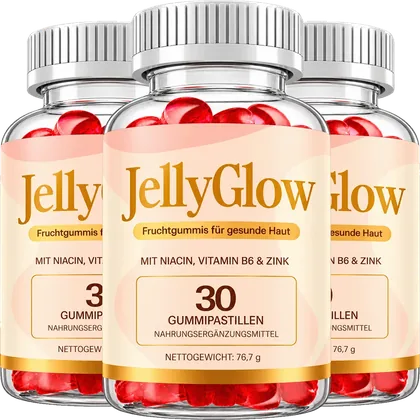
Comparing JellyGlow Gummies vs other skin gummies works best with the labels side by side, not the ads. Seven checks cover it: disclosed amounts, nutrient amounts against US reference values, extract ratios, sugar, cost per day, guarantee terms, and who you can contact.
We do not name other brands, and we do not rank products. Instead, this page shows how JellyGlow answers each check from its own label wrap1 and seller page2, so you can hold any other jar up to the same questions. We are an independent information site, not the maker or seller, and we may earn from order links.
01What should you compare between JellyGlow Gummies and other skin gummies?
Compare what the label discloses, what it costs per day and what happens if you want your money back. Flavour and packaging matter far less.
- Disclosure. Is every ingredient amount printed, or hidden in a blend?
- Nutrient amounts. How does each vitamin and mineral compare with the RDA and the upper limit?
- Extract ratios. Is a botanical given as raw herb, extract, or extract with a ratio?
- Sugar. Where does sugar sit in the ingredient list, and are grams shown?
- Cost per day. Divide the total by the number of daily servings.
- Guarantee. When does the clock start, and what is refunded?
- Contacts and currency. Is there a named company, an address and a clear currency at checkout?
Work through the list for each product and write the answers in two columns. The differences usually become obvious within a few minutes.
02Does JellyGlow Gummies disclose every ingredient amount?
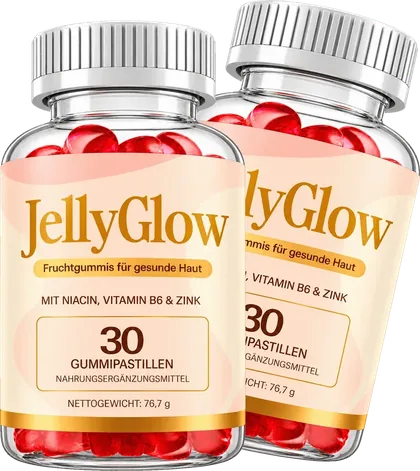
Yes. The JellyGlow label prints an amount for every active ingredient, including each botanical extract, rather than grouping them in a blend1.
Per gummy, the panel lists niacin 25 mg NE, vitamin B6 2 mg, zinc 1.5 mg, maca root 20:1 extract 195 mg, L-citrulline 35 mg, L-carnitine 25 mg, grape seed 20:1 extract 2 mg, Panax ginseng root 20:1 extract 2 mg and rhodiola root 20:1 extract 1 mg. That makes it easy to see that maca is by far the largest active, while the ginseng, grape seed and rhodiola amounts are very small.
When another gummy lists a combined total for several herbs, you cannot tell how much of each you get. That is not automatically a problem, but it makes comparison and safety checks harder. Full detail is on the nutrition facts page.
03How do JellyGlow Gummies nutrient amounts compare with US reference values?
Each gummy gives about 156% of the US Daily Value for niacin, about 118% for vitamin B6 and about 14% for zinc, all below adult upper limits on their own.
| Nutrient | Per gummy | Approx. % US Daily Value | Adult upper limit |
|---|---|---|---|
| Niacin (as nicotinamide) | 25 mg NE | 156% | 35 mg a day from supplements |
| Vitamin B6 | 2 mg | 118% | 100 mg (US); 12 mg (EU authority, 2023) |
| Zinc | 1.5 mg | 14% | 40 mg |
The percentages are our arithmetic from the FDA's Daily Values of 16 mg niacin, 1.7 mg B6 and 11 mg zinc3. The label itself shows EU reference percentages, which differ.
The upper limits come from NIH fact sheets for niacin4, vitamin B65 and zinc6.
The useful comparison is what you take in total. A gummy with 25 mg of niacin alongside a multivitamin or B-complex can push you past 35 mg. Add up every product before you compare.
04What do the 20:1 extract ratios on JellyGlow Gummies tell you?
A 20:1 ratio is usually read as a concentrate made from a larger amount of raw plant. The label does not explain how JellyGlow's ratios were measured.
Four of the botanicals carry a 20:1 ratio: maca, grape seed, Panax ginseng and rhodiola. Ratios make direct comparison tricky. One product may list 500 mg of raw powder, another 25 mg of a 20:1 extract, and the numbers alone do not tell you which gives more of any specific compound. Without a standardised marker, such as a stated percentage of a named compound, you are comparing labels rather than contents.
When you compare, note whether each herb is listed as raw, as an extract, or as an extract with a ratio, and whether any marker compound is named. JellyGlow gives ratios but no marker percentages. Our extract ratios guide explains the terms in more depth.
05How much sugar is in JellyGlow Gummies compared with other gummies?
The label does not show grams of sugar per gummy. Glucose syrup is the first ingredient and sugar the third, so sugar is a main component1.
Most gummies rely on sugars or sugar alcohols for texture, so the order of ingredients is a fair first comparison. A product that lists grams of sugar and calories per piece is easier to fit into a daily budget. If you have diabetes or count carbohydrates, ask the seller for the full nutrition panel before buying, and check the sugar page for how added sugars are counted.
JellyGlow uses pectin as its gelling agent, and no gelatin is listed. If that matters to you, it is a point to check on any other gummy's ingredient list too.
06How should you weigh the botanicals when comparing JellyGlow Gummies?
Weigh them by amount and by evidence. In JellyGlow, maca at 195 mg is the only botanical present in more than a few milligrams.
Memorial Sloan Kettering describes human research on maca as a few small trials and rates the evidence for its common uses as limited7. It also advises talking to a provider if you have a hormone-sensitive cancer. That says nothing about what JellyGlow will do for you, but it is a fair benchmark: a botanical with limited evidence is not a strong reason to choose one gummy over another.
The other extracts in JellyGlow are listed at 1 to 2 mg each. When another product lists more botanicals, check the amount of each rather than the length of the list. A long list of herbs in tiny amounts adds safety questions without adding much else to compare. The maca page covers that ingredient in more depth.
07What does JellyGlow Gummies cost per day?
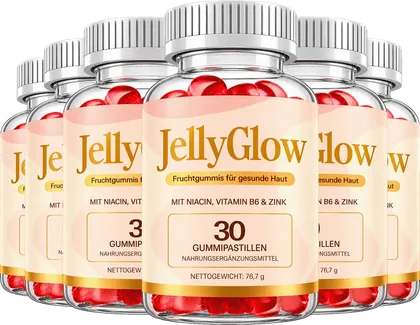
When we checked on November 25, 2026, JellyGlow worked out at about $2.63, $2.30 or $1.63 a day, depending on the pack, at one gummy a day.
Those figures come from $79 per bottle in the 2-bottle pack ($158 total), $69 per bottle in the 3-bottle pack ($207 total) and $49 per bottle in the 6-bottle pack ($294 total). The seller page we read lists the same figures in euros2, so confirm the currency and total at the live checkout. The seller page says shipping is free from 3 jars and added on the 2-jar pack.
To compare fairly, divide any product's total, including shipping, by its number of daily servings. A cheaper jar that asks for two gummies a day may cost more per day than it first appears. The pricing page has the pack-by-pack table.
08How do JellyGlow Gummies guarantee terms compare?
JellyGlow's seller page offers a 30-day money-back guarantee that starts when you receive the order and also covers opened jars. It refunds the product price only.
Original and return shipping are not refunded, according to the seller page, which also mentions a 14-day statutory right of withdrawal under EU rules. When you compare another product, ask the same four questions: does the clock start at purchase or delivery, are opened jars accepted, is shipping refunded, and who pays to send it back?
Check contacts and currency too. JellyGlow's label names Digistore24 MSLW Limited in Dublin and [email protected], and the seller page describes a one-time payment with no subscription. A product with no named company or a hidden repeat billing term is harder to deal with if something goes wrong. The guarantee page has the full wording.
09How does JellyGlow Gummies differ from collagen, biotin and multivitamin gummies?
JellyGlow's ingredient list names no collagen and no biotin. It overlaps with a multivitamin mainly through niacin, vitamin B6 and zinc.
- Collagen gummies are built around a protein ingredient. JellyGlow contains none and uses pectin rather than gelatin.
- Biotin gummies centre on one B vitamin that JellyGlow does not list.
- Multivitamins usually include niacin, B6 and zinc, so taking both doubles up on those three.
The front label carries the seller's printed line “Gummies for Healthy Skin†”, with a footnote reading “Niacin contributes to the maintenance of normal skin”. Those are the seller's words and refer to niacin only. They do not tell you how JellyGlow compares with any other product for your skin.
If you take any prescription medicine, are pregnant or nursing, or have diabetes, ask a doctor or pharmacist before adding any of these. Our safety page lists the specific medicine flags for JellyGlow's botanicals.
Tool
Vitamin stack check
Type what your other supplements give you per day (from their labels). See your total with one JellyGlow gummy against the US adult upper limit. Nothing is sent anywhere.
Safety: JellyGlow is for adults 18 and over. The label says it is not for pregnant or nursing women. Its vitamins add up with other supplements, and it lists botanicals with limited safety data, including ginseng and L-citrulline, which can matter with medicines for blood sugar, blood pressure or erectile dysfunction. If you have a medical condition or take any medicine, ask your doctor or pharmacist before use. Never change a prescribed medicine on your own. Stop and get medical help for a severe rash, swelling, trouble breathing, fainting, or yellow skin or eyes.
Frequently asked questions
Is JellyGlow Gummies the same as collagen gummies?
No. JellyGlow's ingredient list names no collagen; it lists niacin, vitamin B6, zinc and botanical extracts, with pectin as the gelling agent.
What should I check when looking at JellyGlow Gummies alternatives?
Check whether every amount is disclosed, how nutrients compare with upper limits, sugar, cost per day, guarantee terms and who you can contact. Use the same checks for every product.
Is there a simple JellyGlow Gummies comparison method?
Put both labels side by side and work through seven checks: disclosure, nutrient amounts, extract ratios, sugar, cost per day, guarantee and contacts. Write the answers in two columns.
Can I take JellyGlow Gummies with a multivitamin?
Ask a doctor or pharmacist first, because both usually contain niacin, vitamin B6 and zinc. Add the niacin from every product together, since the adult upper limit from supplements is 35 mg a day.
Does JellyGlow Gummies contain biotin like biotin gummies?
No. Biotin is not on JellyGlow's ingredient list. Its B vitamins are niacin as nicotinamide and vitamin B6.