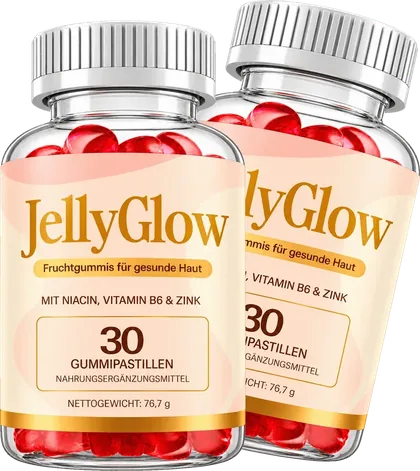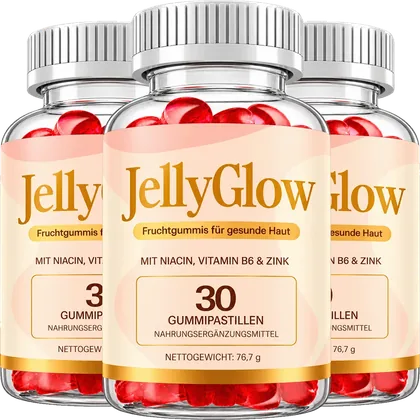
JellyGlow Gummies Panax ginseng is a 2 mg amount of Panax ginseng root 20:1 extract in each gummy, printed on the label with no reference value1. It is a very small line in the formula, but ginseng carries more safety notes than most botanicals.
That is why this page spends more time on cautions than on research. It covers the amount, what NCCIH says Asian ginseng has been studied for, and the four flags that matter most: sleep, blood sugar, clotting and autoimmune disorders, plus pregnancy. We are an independent information site, not the maker or seller. Nothing here says what JellyGlow will do for you.
01How much Panax ginseng is in JellyGlow Gummies?
Each JellyGlow gummy lists 2 mg of Panax ginseng root 20:1 extract, with one gummy a day suggested for adults1. The daily amount from the gummy is therefore 2 mg of extract.
The panel marks it with two stars, meaning "No NRV established," so no percentage appears. In the ingredient list it comes after pyridoxine hydrochloride, the vitamin B6 form, and before grape seed extract, near the end of the list where the smallest amounts sit.
If you take the 20:1 ratio at face value, 2 mg of extract would come from about 40 mg of ginseng root. That is our arithmetic and only a rough guide, since ratios are not standardized and the label names no marker compound. Our extract ratios page explains what a ratio can and cannot tell you.
02Is JellyGlow Gummies ginseng the same as Korean ginseng?
The label names the species, Panax ginseng, which is the plant usually sold as Asian or Korean ginseng1. NCCIH covers it under the name Asian ginseng2.
What the label does not tell you is where the root was grown, how old it was, or whether it was processed into what is sold as red ginseng. It also does not say whether the extract is standardized to any compounds. So "Korean ginseng" is a fair common name for the species, but the label gives no origin to back any claim about Korea specifically.
Panax ginseng is also a different plant from American ginseng and from so-called Siberian ginseng. If you compare labels, check the Latin name rather than the common name.
| Question | Answer on the JellyGlow label |
|---|---|
| Species | Panax ginseng |
| Plant part | Root |
| Extract ratio | 20:1 |
| Amount per gummy | 2 mg |
| Country of origin | Not stated |
| Standardized compounds | Not stated |
03What does NCCIH say ginseng has been studied for, and does it apply to JellyGlow Gummies?
NCCIH says most trials of Asian ginseng have been small and short, which limits what they can show2. That is the key point about the evidence base.
Small, short trials can hint at something worth studying further. They rarely settle a question, and they cannot tell you much about long-term use. They also tested ginseng amounts and forms chosen by each research team, often with different preparations from one study to the next, not a 2 mg extract inside a sugar gummy with eight other actives.
So whatever ginseng has been studied for, the research says nothing about what JellyGlow will do for you. The seller page we read makes no claim about ginseng3, and the only skin line on the front label points, by its footnote, to niacin.
04Can the ginseng in JellyGlow Gummies affect sleep?
NCCIH lists insomnia, meaning trouble sleeping, as the most common side effect of Asian ginseng2. Nobody has tested whether 2 mg in a gummy has that effect.
Sleep comes up more than once in this formula. NCCIH also lists trouble sleeping among rhodiola's side effects4, and the maca clinician notes include reports of insomnia. Two or three small amounts of ingredients with that note are worth knowing about if you already sleep poorly.
- The seller page suggests taking the gummy at the same time each day, for example after breakfast3.
- If your sleep changes after you start, stop and mention it to your doctor or pharmacist.
- Tell them about coffee, tea and other supplements as well, so the whole picture is clear.
See our rhodiola page and how to use page for more.
05Does JellyGlow Gummies ginseng matter for blood sugar?
NCCIH says Asian ginseng may lower blood sugar, and that people with diabetes should talk to their health care provider before using it2. That applies to JellyGlow because it contains ginseng.
There is a second reason for people with diabetes to ask. Glucose syrup is the first ingredient and sugar is the third, so each gummy brings added sugar, and the label we hold shows no grams per gummy1. FDA guidance sets the Daily Value for added sugars at 50 g5.
One ingredient may lower blood sugar while the base adds sugar. That is exactly the sort of mix a doctor, pharmacist or diabetes educator should look at with you, using the label in hand. Never change a diabetes medicine because of a supplement. Our sugar page goes into the added-sugar side.
06Is JellyGlow Gummies ginseng a concern for clotting or autoimmune disorders?
NCCIH says Asian ginseng may interfere with blood clotting and may worsen autoimmune disorders2. Both notes make it a reason to ask a doctor before trying JellyGlow.
Clotting
If you take a blood thinner, have a bleeding disorder or have surgery coming up, show the label to your doctor or pharmacist first. Do not stop or change a blood thinner on your own.
Autoimmune disorders
If you live with an autoimmune condition, ask the doctor who manages it before adding any ginseng product, even a small one.
Rare but serious reactions
NCCIH also notes rare cases of severe rash, liver damage and allergic reactions2. Stop and get medical help for a severe rash, swelling, trouble breathing, or yellow skin or eyes. You can report a problem to the FDA through MedWatch6.
07What if you already take another ginseng product with JellyGlow Gummies?
If you already use a ginseng capsule, tea, tonic or multi-herb blend, JellyGlow adds a little more ginseng on top. Count it, and tell your pharmacist about both.
Ginseng turns up in more places than people expect. It can appear in herbal teas, some energy drinks, multi-herb capsules and so-called men's or women's blends. Each product may use a different species, part or ratio, so the amounts are hard to add up from labels alone.
- Check the Latin name on every label. Panax ginseng is the species in JellyGlow1.
- Note the form: raw root, powder or extract, and any ratio given.
- Note the amount per serving and how many servings you take a day.
- Ask a pharmacist to look at the combined list, not each product on its own.
The same rule holds for the vitamins in the gummy. The niacin, vitamin B6 and zinc amounts are modest alone, but they add up with a multivitamin, B-complex or hair, skin and nail product. Our ingredients page lists every active with its amount so you can do that count in one place.
08Can you take JellyGlow Gummies ginseng while pregnant or nursing?
No, the label says JellyGlow is not for pregnant or nursing mothers1. NCCIH adds that some experts advise against ginseng in pregnancy and breastfeeding2.
Ginseng is not the only reason. NCCIH says little is known about rhodiola or grape seed extract in pregnancy and breastfeeding, and the maca source says it may not be safe then. If you are pregnant, planning a pregnancy or nursing, talk to your doctor or midwife about any supplement before using it.
The label also says the gummy is not for anyone under 18. Keep jars out of reach of young children, since a sweet gummy can look like candy to a child. If a child eats several, call a poison control center or a doctor and have the label ready.
09Does JellyGlow Gummies ginseng interact with medicines?
NCCIH says Asian ginseng may interact with medicines, so anyone on a prescription should ask a doctor or pharmacist before using JellyGlow2. The label gives the same advice for anyone taking medication.
Bring this list to that conversation:
- Every prescription medicine, with dose.
- Every supplement, vitamin and herbal product, including JellyGlow.
- Any planned surgery or dental work.
- Any history of diabetes, bleeding problems, autoimmune disease or poor sleep.
NCCIH explains in plain terms how supplements and medicines can interact7. Our medications page groups every JellyGlow ingredient note by medicine type, and the safety page gathers the rest.
Safety: JellyGlow is for adults 18 and over. The label says it is not for pregnant or nursing women. Its vitamins add up with other supplements, and it lists botanicals with limited safety data, including ginseng and L-citrulline, which can matter with medicines for blood sugar, blood pressure or erectile dysfunction. If you have a medical condition or take any medicine, ask your doctor or pharmacist before use. Never change a prescribed medicine on your own. Stop and get medical help for a severe rash, swelling, trouble breathing, fainting, or yellow skin or eyes.
Frequently asked questions
What is the ginseng dose in one JellyGlow gummy?
The label lists 2 mg of Panax ginseng root 20:1 extract per gummy, with one gummy a day suggested for adults . No reference value exists, so no percentage is printed.
Could the ginseng in JellyGlow Gummies keep me awake?
NCCIH lists insomnia as the most common side effect of Asian ginseng, though nobody has tested a 2 mg gummy for it . If your sleep changes, stop and talk to your doctor or pharmacist.
Should people with diabetes ask about JellyGlow ginseng and blood sugar?
Yes. NCCIH says ginseng may lower blood sugar, and the gummy's base is glucose syrup and sugar, so ask your doctor or pharmacist before using it.
Is JellyGlow ginseng safe in pregnancy?
The label says JellyGlow is not for pregnant or nursing mothers. NCCIH notes that some experts advise against ginseng in pregnancy and breastfeeding.
Is the ginseng in JellyGlow Gummies Korean ginseng?
The label names Panax ginseng, the species usually sold as Asian or Korean ginseng. It does not state where the root was grown or whether it is red ginseng.