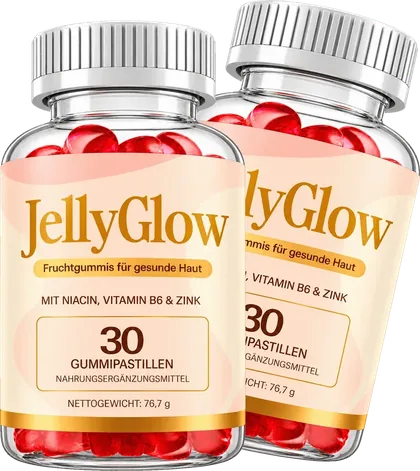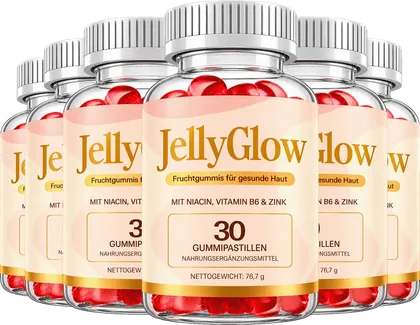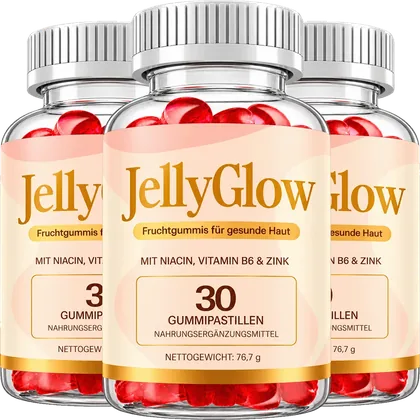
JellyGlow Gummies niacin content is 25 mg NE per gummy, supplied as nicotinamide, which the label lists as 156% of the EU Nutrient Reference Value1. That makes niacin the vitamin with the highest percentage on the panel, ahead of vitamin B6 and zinc.
This page looks at niacin on its own. We explain what the form on the label means, how 25 mg compares with daily needs and the adult upper limit, why the flushing you may have heard about is tied to a different form, and when a second B vitamin product could tip your daily total over the limit. We are an independent information site, not the maker or seller, and nothing here says what JellyGlow will do for you.
01How much niacin is in one JellyGlow Gummies serving?
One JellyGlow Gummies serving is one gummy, and it lists 25 mg NE of niacin, shown as 156% NRV1. The suggested use on the label is one gummy once a day for adults, so 25 mg is also the daily amount from this product.
NE stands for niacin equivalents. It is the unit nutrition labels use so that different forms of niacin can be counted on one scale. The label gives no extra breakdown, so 25 mg NE is the number to work with.
The US uses a different yardstick from the EU. The FDA Daily Value for niacin is 16 mg NE2, which puts one gummy at roughly 156% of the US Daily Value as well, by our arithmetic. The two reference values happen to match for niacin, which is not the case for vitamin B6.
- Serving size: 1 gummy
- Niacin per serving: 25 mg NE
- EU reference: 156% NRV, as printed
- US reference: about 156% of the Daily Value, our calculation
02Which form of niacin do JellyGlow Gummies use?
JellyGlow Gummies use nicotinamide, the name that appears in the ingredient list on the label1. The nutrition panel simply says "Niacin (B3)", so you need the ingredient list to see the form.
Niacin is a family name. The two forms you will meet most often in supplements are nicotinic acid and nicotinamide (also called niacinamide). They count toward the same daily niacin total, but they do not behave the same way at higher doses. The National Institutes of Health fact sheet notes that nicotinamide has fewer side effects than nicotinic acid3.
Nicotinamide sits in the middle of the ingredient list, after L-carnitine and before the natural flavours. Ingredients are listed by weight, so the sugars and maca extract come first. You can see the full order on our ingredients page.
03What does niacin do in the body, apart from JellyGlow Gummies?
Niacin helps your body turn the food you eat into usable fuel, and it supports the development and function of your cells3. That is the general role of the vitamin, described by the National Institutes of Health.
That general role is true of niacin from any source, including meat, fish, whole grains and fortified foods. It is not evidence about any particular gummy. Most people in the US get enough niacin from food, and a supplement does not add a new job for the vitamin to do.
The front of the jar carries a skin line linked to niacin by a small dagger symbol. That line is the seller's printed wording, not a finding by this site. We discuss what the label says, in the seller's own words, on the EU label page. Here we only note that the skin line on the front label refers to niacin, and that a nutrient's general role says nothing about the result you personally will see from JellyGlow.
04How does JellyGlow Gummies niacin compare with daily needs?
One JellyGlow Gummies serving gives more niacin than the adult daily recommendation. The RDA is 16 mg NE for men and 14 mg NE for women3, and one gummy lists 25 mg NE1.
The RDA is the amount that covers the needs of nearly all healthy people. It is not a goal to beat, and going above it does not mean extra benefit. The table puts the numbers side by side.
| Reference point | Niacin amount | One gummy compared |
|---|---|---|
| RDA, adult women | 14 mg NE | About 1.8 times the RDA |
| RDA, adult men | 16 mg NE | About 1.6 times the RDA |
| US Daily Value | 16 mg NE | About 156% |
| Upper limit from supplements, adults | 35 mg | 10 mg of headroom left |
The multiples in the right-hand column are our own arithmetic from the figures shown. Your food intake is on top of this, but the upper limit discussed below applies to supplements and fortified foods, not to niacin that occurs naturally in food.
05Is the niacin in JellyGlow Gummies under the upper limit?
Yes, on its own. The adult upper limit for niacin from supplements is 35 mg a day3, and one JellyGlow Gummies serving lists 25 mg NE1.
The catch is stacking. The upper limit counts every supplement you take, not just one. Because one gummy already uses 25 of the 35 mg, any other product that adds more than 10 mg of niacin would take your supplement total past the limit. Products that often contain niacin include:
- Daily multivitamins
- B-complex and "B-50" or "B-100" style tablets
- Hair, skin and nail blends
- Some fortified drinks and powders
- A second skin-themed gummy
Taking two gummies a day would also mean 50 mg NE, which is above 35 mg. The label says not to exceed the recommended dose of one gummy1. If you already take any of the products above, read their labels for "niacin", "nicotinamide", "niacinamide" or "nicotinic acid", add up the milligrams, and check the total with a pharmacist. Our how to use page covers the one-a-day direction in more detail.
06Will JellyGlow Gummies niacin cause a flush?
The well-known niacin flush is linked to nicotinic acid, not to nicotinamide, the form JellyGlow Gummies list. Flushing means burning, tingling, itching and red skin, and it is tied to nicotinic acid at 30 mg or more3.
Nicotinamide has fewer side effects than nicotinic acid3. That is why the form matters more than the number on the panel. Very high nicotinamide doses, around 500 mg a day or more, can cause diarrhea and easy bruising, and 3,000 mg or more has been linked to liver damage3. Those amounts are many times higher than a single gummy.
Everyone is different, and no source we hold measured how people react to this specific gummy. If you notice redness, itching, an upset stomach or anything else unusual after taking any supplement, stop taking it and talk to a doctor or pharmacist. For serious symptoms such as swelling, trouble breathing, fainting, or yellow skin or eyes, get medical help straight away. Our side effects page lists what to watch for across all the ingredients, not just niacin.
07Which medicines matter for JellyGlow Gummies niacin?
The tuberculosis medicines isoniazid and pyrazinamide can lower niacin levels in the body3. That is the main niacin-specific interaction named in the NIH consumer fact sheet.
The fact sheet also advises telling your doctor or pharmacist about any supplement you take3. That advice fits the whole gummy, because the niacin sits alongside botanicals such as maca and Panax ginseng, and amino acids such as L-citrulline, which have their own medicine notes.
Please do not change or stop any medicine on your own. If you take prescription medicine, are pregnant or nursing, are under 18, or have a medical condition, ask a doctor or pharmacist before you use JellyGlow. The label itself says it is not for people under 18 or for pregnant or nursing mothers1. The medications page goes through each ingredient's interactions in one place.
08What should you check before adding JellyGlow Gummies niacin to your routine?
Check your other supplements first, because niacin adds up quickly. A short review of the labels you already own is the simplest step.
- Find every product you take that lists niacin, nicotinamide, niacinamide or nicotinic acid.
- Add the milligrams per day, including 25 mg NE from one gummy.
- Compare the total with the 35 mg adult upper limit for supplements.
- Note any tuberculosis medicine, and any other prescription, and bring the list to a pharmacist.
- Keep to one gummy a day, as the label directs.
The gummy also contains vitamin B6 and zinc, which raise their own stacking questions. See the vitamin B6 and zinc pages for those numbers.
Tool
Vitamin stack check
Type what your other supplements give you per day (from their labels). See your total with one JellyGlow gummy against the US adult upper limit. Nothing is sent anywhere.
Safety: JellyGlow is for adults 18 and over. The label says it is not for pregnant or nursing women. Its vitamins add up with other supplements, and it lists botanicals with limited safety data, including ginseng and L-citrulline, which can matter with medicines for blood sugar, blood pressure or erectile dysfunction. If you have a medical condition or take any medicine, ask your doctor or pharmacist before use. Never change a prescribed medicine on your own. Stop and get medical help for a severe rash, swelling, trouble breathing, fainting, or yellow skin or eyes.
Frequently asked questions
What is the niacin dose in JellyGlow Gummies?
Each JellyGlow gummy lists 25 mg NE of niacin, shown as 156% of the EU Nutrient Reference Value . The label suggests one gummy a day for adults, so that is the daily dose from this product.
Is the niacin in JellyGlow nicotinamide or nicotinic acid?
The ingredient list names nicotinamide . Nicotinamide is the form with fewer side effects than nicotinic acid, according to the NIH fact sheet.
Can JellyGlow cause a niacin flush?
The classic flush is linked to nicotinic acid at 30 mg or more, and JellyGlow lists nicotinamide instead . Any reaction is still possible, so stop and ask a doctor or pharmacist if you notice redness, itching or anything unusual.
Does JellyGlow stay under the niacin upper limit if I take a B-complex too?
Not always. One gummy uses 25 mg of the 35 mg adult upper limit from supplements, so a B-complex or multivitamin with more than 10 mg of niacin would take you over it.
What does the JellyGlow niacin skin claim on the jar mean?
The skin line on the front label is the seller's wording, tied to niacin by a dagger symbol. It describes a general nutrient role and does not tell you what result JellyGlow will give you.