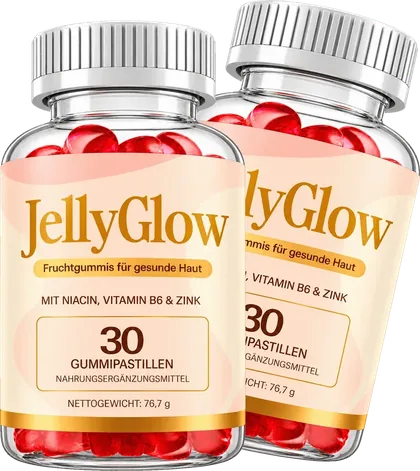
JellyGlow Gummies L-carnitine is a 25 mg amount of the compound L-carnitine in each gummy, listed on the label with no Nutrient Reference Value1. It is one of six non-vitamin actives in the gummy, and it sits in the middle of that group by weight.
This page explains what that number means next to the amounts the NIH Office of Dietary Supplements discusses, which side effects and medicine notes the NIH lists, and what nobody has told us about why it is in the formula. We are an independent information site. We do not make or sell JellyGlow, and nothing here says what the gummy will do for you.
01How much L-carnitine is in JellyGlow Gummies?
Each JellyGlow gummy lists 25 mg of L-carnitine, and the suggested use is one gummy a day for adults1. So the daily amount from the gummy is 25 mg.
The label shows two stars where a percentage would go. The footnote says "No NRV established," which means the EU has no reference intake for carnitine, so there is no percentage to print. The US has no Daily Value for it either. That is normal for this compound, not a gap in the label.
Here is where L-carnitine sits among the actives on the panel, by weight per gummy:
| Active (label name) | Per gummy | Reference value |
|---|---|---|
| Maca Root 20:1 Extract | 195 mg | None |
| L-Citrulline | 35 mg | None |
| L-Carnitine | 25 mg | None |
| Niacin (B3) | 25 mg NE | 156% NRV |
| Grape Seed 20:1 Extract | 2 mg | None |
| Panax Ginseng Root 20:1 Extract | 2 mg | None |
| Vitamin B6 | 2 mg | 143% NRV |
| Zinc | 1.5 mg | 15% NRV |
| Rhodiola Rosea Root 20:1 Extract | 1 mg | None |
In the full ingredient list, L-carnitine comes right after L-citrulline and right before nicotinamide, the niacin form1. For the whole panel, see the nutrition facts page.
02What does the NIH say about L-carnitine in JellyGlow Gummies?
The NIH fact sheet says healthy people make enough carnitine on their own, so most adults do not need it from a supplement2. That is the starting point for reading this line of the label.
The same fact sheet notes that no upper intake limit has been set for carnitine2. An unset limit does not mean any amount is fine. It means experts have not fixed a number, so the safety picture rests on the side effects seen at larger intakes.
Keep the scope in mind. The NIH writes about carnitine in general. It does not review JellyGlow, test the gummy or comment on a 25 mg amount mixed with maca, ginseng and the other actives. What the fact sheet says about carnitine says nothing about what JellyGlow will do for you.
03How does 25 mg in JellyGlow Gummies compare with gram doses?
The 25 mg in one gummy is a tiny fraction of the gram amounts the NIH links to side effects2. The NIH mentions problems at about 3 g, which is 3,000 mg, a day.
By our arithmetic, 3,000 mg is 120 times 25 mg. Put another way, a person would need 120 gummies in a day to reach that level from JellyGlow alone. Nobody should do that. The label says take one gummy a day and do not exceed the recommended dose1, and the other actives would reach unsafe levels long before carnitine did.
- One gummy: 25 mg of L-carnitine.
- A 30-gummy jar: 750 mg in total, spread over 30 days.
- The NIH side-effect level: about 3,000 mg in a single day.
The comparison matters for one reason. If you already take a stand-alone carnitine product, which are often sold in gram amounts, the 25 mg from JellyGlow adds only a little to that total. The bigger product is the one to discuss with a pharmacist. Bring both labels to that talk, so the pharmacist can see the full daily total from every source rather than guess at it.
04What side effects are linked to carnitine, and do they apply to JellyGlow Gummies?
The NIH links about 3 g of carnitine a day to nausea, vomiting, other stomach and gut symptoms, and a fishy body odor2. Those reports are about intakes far above the 25 mg in a JellyGlow gummy.
That does not mean the gummy as a whole is free of side effects. It has nine actives, plus sugar, and each one carries its own notes. If you feel unwell after starting it, the cause could be any of them, or nothing to do with the gummy at all.
Signs to act on
- Stop and get medical help for a severe rash, swelling, trouble breathing, fainting or dizziness.
- Stop and call a doctor for yellow skin or eyes.
- For milder stomach upset, stop and talk to a doctor or pharmacist before trying again.
You can report a problem with any supplement to the FDA through MedWatch3. Our side effects page covers every active in the gummy, not just carnitine.
05What is the TMAO question for L-carnitine in JellyGlow Gummies?
TMAO is a compound gut bacteria make from carnitine that the body does not absorb, and the NIH says it has been linked to heart risk2. The NIH also says what that link means is unclear.
So two honest points sit side by side. First, the TMAO link is a real topic in carnitine research. Second, the NIH does not say a small daily carnitine amount causes harm through TMAO, and it does not discuss amounts as small as 25 mg.
If you have heart disease, or a doctor follows you for heart risk, bring the JellyGlow label to that doctor. Ask about the whole gummy, not just carnitine, because L-citrulline may lower blood pressure and ginseng may interfere with blood clotting. Our L-citrulline page and ginseng page explain those notes.
06Does JellyGlow Gummies carnitine matter if you take seizure medicines?
Yes, it is worth raising. The NIH says valproic acid and other seizure medicines, including phenobarbital, phenytoin and carbamazepine, can lower carnitine levels in the body2.
That is a medicine-and-nutrient link, not advice to add carnitine. Some people who take these medicines are checked for low carnitine by their care team. Whether a 25 mg gummy changes anything is a question for that team, not for a label or for us.
Seizure medicines also come up with another JellyGlow ingredient. The NIH notes that vitamin B6 can interact with some epilepsy drugs, and each gummy has 2 mg of B64. See our vitamin B6 page for that note.
- Write down every medicine and supplement you take, with amounts.
- Show the JellyGlow label to your neurologist or pharmacist.
- Ask before your first gummy, not after.
- Never change or stop a seizure medicine because of a supplement.
For a wider look at mixing pills and supplements, see JellyGlow and medications. NCCIH also explains how supplements and medicines can interact5.
07Why is L-carnitine in JellyGlow Gummies?
Neither the label nor the seller page we read explains why L-carnitine is in the formula1. We will not guess a reason for the maker.
What we can say is what the documents show. The label makes one printed skin line, and its footnote ties it to niacin only. The seller page lists nutrient claims allowed under EU rules for niacin, zinc and vitamin B66. None of those claims is about carnitine. So carnitine is in the gummy without any claim attached to it.
If the reason matters to you, ask the seller directly through the order desk email on the label, helpdesk@digistore24.ie. Ask what amount they chose, why, and whether any test result covers it. Read any answer you get as the seller's statement, not as evidence. The FDA does not approve supplements before they are sold7.
08Who should check with a doctor before JellyGlow Gummies?
Anyone who is pregnant, nursing, under 18, has a medical condition or takes any medicine should ask a doctor or pharmacist before using JellyGlow Gummies1. The label itself says this.
For carnitine in particular, the people with the most reason to ask are those on valproic acid or another seizure medicine, and those whose doctor watches their heart risk. For the gummy as a whole, the list is longer: people with diabetes, low blood pressure, a hormone-sensitive cancer, an autoimmune or bleeding disorder, and anyone on erectile dysfunction medicines or nitrates.
Our safety page sets out every flag in one place, and the ingredients page lists all nine actives with links to each one.
Safety: JellyGlow is for adults 18 and over. The label says it is not for pregnant or nursing women. Its vitamins add up with other supplements, and it lists botanicals with limited safety data, including ginseng and L-citrulline, which can matter with medicines for blood sugar, blood pressure or erectile dysfunction. If you have a medical condition or take any medicine, ask your doctor or pharmacist before use. Never change a prescribed medicine on your own. Stop and get medical help for a severe rash, swelling, trouble breathing, fainting, or yellow skin or eyes.
Frequently asked questions
What is the L-carnitine dose in one JellyGlow gummy?
The label lists 25 mg of L-carnitine per gummy, and the suggested use is one gummy a day for adults . No reference value is set, so no percentage is printed.
Can the carnitine in JellyGlow Gummies cause side effects?
The NIH links nausea, vomiting, gut symptoms and a fishy body odor to about 3 g of carnitine a day, which is far above 25 mg . Other ingredients in the gummy carry their own side-effect notes, so stop and ask a doctor if you feel unwell.
Should I ask about JellyGlow carnitine if I take medicine for seizures?
Yes. The NIH says valproic acid, phenobarbital, phenytoin and carbamazepine can lower carnitine levels, so show the label to your doctor or pharmacist first and do not change your medicine.
Does the carnitine in JellyGlow Gummies raise TMAO?
Nobody has measured that for this gummy. The NIH says gut bacteria turn unabsorbed carnitine into TMAO, which has been linked to heart risk, but it calls the meaning of that link unclear.
Why did the maker put carnitine in JellyGlow Gummies?
The label and seller page we read do not say. No claim on either one is about carnitine, so ask the seller at [email protected] if you want their reason.