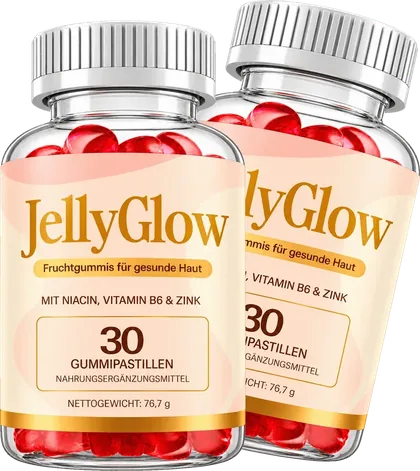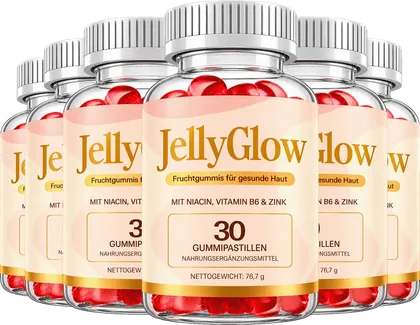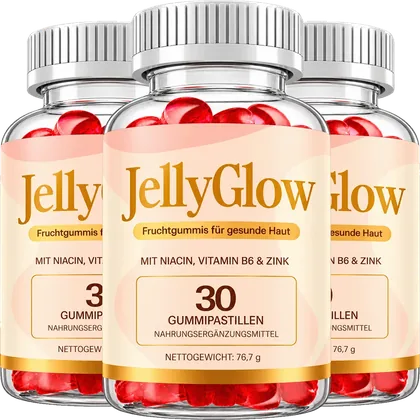
Are JellyGlow Gummies safe? For a healthy adult who follows the label, the vitamin and mineral amounts in one gummy sit below US upper limits, but the plant extracts have limited safety data and several groups should ask a doctor first. That is the short answer, and the rest of this page shows the numbers behind it.
No supplement can be called safe for everyone. Safety depends on the dose, what else you take, and your own health. We are an independent information site, not the maker or seller, so we compare the printed label with public health sources and show our working.
01What do the JellyGlow Gummies label warnings say?
The JellyGlow Gummies label sets four limits: adults only, one gummy a day, not for pregnant or nursing women, and a physician check if you take medicine or have a condition1.
The full warning block on the wrap covers these points:
- Do not exceed the recommended dose of one gummy once a day.
- Not for anyone under 18, or for pregnant or nursing mothers.
- Consult a physician before use, especially if you take a medication, have a medical condition or are under medical supervision.
- Keep out of reach of young children.
- Do not use if the safety seal is damaged or missing.
- Food supplements are not a substitute for a varied and balanced diet and a healthy lifestyle.
- Store in a cool, dry place below 30°C, which is 86°F.
These lines are the seller's own safety terms. Everything else on this page adds context from health agencies. For a plain list of who falls into the ask-first groups, see who JellyGlow is for.
02How do JellyGlow Gummies amounts compare with upper limits?
One JellyGlow Gummy contains less niacin, vitamin B6 and zinc than the US upper limits for adults. The upper limit is the most you can take daily without likely harm.
| Nutrient | Per gummy (label) | Adult upper limit | Share of limit |
|---|---|---|---|
| Niacin (as nicotinamide) | 25 mg NE | 35 mg from supplements | About 71% |
| Vitamin B6 | 2 mg | 100 mg (US); 12 mg (EFSA) | 2% (US); about 17% (EFSA) |
| Zinc | 1.5 mg | 40 mg | About 4% |
The amounts come from the label1.
The limits come from the NIH Office of Dietary Supplements for niacin2, vitamin B63 and zinc4. The shares are our own arithmetic. The B6 row shows two limits because the European Food Safety Authority set a lower one in 2023.
Niacin is the row to notice. One gummy uses most of the room under the supplement limit, which leaves little space for anything else that contains niacin.
03Why do other supplements change the JellyGlow Gummies picture?
Upper limits count every source you take, not one product. Add JellyGlow Gummies to a multivitamin, B-complex or hair, skin and nail product, and the totals can climb past the limits.
Here is how stacking plays out for each nutrient:
- Niacin. 25 mg NE per gummy plus a B-complex with 20 mg or more takes you past the 35 mg supplement limit2.
- Vitamin B6. The NIH says high supplement doses taken for a year or more can cause severe nerve damage3. Two milligrams is small, but some B-complex products carry far more.
- Zinc. The NIH links 50 mg or more a day for weeks to lower copper absorption4. The gummy's 1.5 mg rarely matters unless you also take a high-dose zinc product.
Add up the labels before you start. If you are unsure, take every bottle to a pharmacist. Our ingredients page lists each amount in one place.
04Is the niacin in JellyGlow Gummies likely to cause flushing?
Flushing is less likely with this form. The label lists nicotinamide, and the NIH links flushing mainly to nicotinic acid at 30 mg or more.
Flushing means burning, tingling, itching and red skin, usually on the face, arms and chest. The NIH explains that nicotinamide, the niacin form in JellyGlow, has fewer side effects than nicotinic acid2. The label confirms nicotinamide in the ingredient list1.
That does not rule out every reaction. If you notice redness or itching after a gummy, stop and tell your doctor, and check whether another product you take contains nicotinic acid. Our niacin page covers the two forms in more detail.
05What about the plant extracts in JellyGlow Gummies?
The plant extracts in JellyGlow Gummies have far less safety research than the vitamins. They have no set upper limits, and several carry specific flags.
The gummy contains maca, L-citrulline, L-carnitine, grape seed, Panax ginseng and rhodiola. Most come in small amounts, and maca is the largest at 195 mg of a 20:1 extract. The flags that matter most for safety are these:
- Asian ginseng may affect blood sugar and blood clotting, may worsen autoimmune disorders, and is most often linked to trouble sleeping.
- L-citrulline may lower blood pressure, and it should not be mixed with ED medicines or nitrates without a doctor's advice.
- Maca needs a provider talk for anyone with a hormone-sensitive cancer.
- Rhodiola has not enough reliable evidence for any health use, and little is known in pregnancy.
Our side effects page lists what each source names, with citations.
06Does the FDA check JellyGlow Gummies before they are sold?
No. The FDA does not approve dietary supplements before they go on sale, so no agency has reviewed JellyGlow Gummies for safety or effect first.
The FDA explains that companies are responsible for making sure their supplements are safe and their labels are truthful, and that the agency steps in after a product is on the market5. The NIH adds that supplements can have strong effects and can interact with medicines, and that you should tell your doctor about everything you take6.
JellyGlow is sold as an EU food supplement, distributed by Digistore24 in Ireland, according to the label1. The seller page shows no third-party test badges. That does not make the gummies unsafe, but it means you are relying on the label and on your own checks.
07Simple habits that keep JellyGlow Gummies use on the safe side
Most safety problems with supplements come from taking too much, mixing products or skipping a medicine check. A few habits cover all three.
- Take one gummy a day, as the label says, and never double up after a missed day.
- Check the seal before you open a new jar, and do not use it if the seal is broken.
- Keep a written list of every supplement and medicine you take, and show it to your pharmacist.
- Count the sugar if you have diabetes. Glucose syrup is the first ingredient, and our sugar page explains what the label leaves out.
- Store the jar below 86°F and out of children's reach.
- Note the lot number and best-before date from the base of the jar in case you need to report a problem.
None of these steps needs special knowledge. They simply make sure the label's own limits are followed, and that a doctor or pharmacist can see the full picture of what you take.
08When should you stop JellyGlow Gummies and get help?
Stop the gummies and get medical help right away for a severe rash, swelling, trouble breathing, fainting or dizziness, or yellow skin or eyes. These are warning signs, not mild side effects.
Milder problems, such as an upset stomach or poor sleep, are a reason to stop and talk to your doctor. Bring the jar so your doctor can read the full ingredient list.
You can report a problem with any supplement to the FDA through MedWatch, its safety reporting program7. Your doctor can file a report too. Keep the jar, the lot number from its base and your order details, which also helps if you contact the order desk through our customer support page.
09Is it safe to take JellyGlow Gummies for months at a time?
Nobody has published long-term safety data on JellyGlow Gummies as a product. The label sets one gummy a day but no maximum length of use.
The ingredient sources give some guidance. Rhodiola is described by NCCIH as possibly safe for up to 12 weeks, with less known beyond that. The B6 nerve warning from the NIH applies to high doses over a year or more3, far above one gummy, but it shows why totals matter over time. Ginseng trials have mostly been small and short.
If you plan to take the gummies for months, tell your doctor at your next visit and review your supplement list together. A periodic check is a sensible habit for any supplement, and it is the safest way to keep an eye on stacking.
Tool
Vitamin stack check
Type what your other supplements give you per day (from their labels). See your total with one JellyGlow gummy against the US adult upper limit. Nothing is sent anywhere.
Tool
Check-first screener
Tick anything that applies. You get a short list of questions to take to your doctor or pharmacist. Nothing is sent anywhere.
Nothing ticked yet. Even so, the label says to consult a physician if you take medication or have a medical condition.
Safety: JellyGlow is for adults 18 and over. The label says it is not for pregnant or nursing women. Its vitamins add up with other supplements, and it lists botanicals with limited safety data, including ginseng and L-citrulline, which can matter with medicines for blood sugar, blood pressure or erectile dysfunction. If you have a medical condition or take any medicine, ask your doctor or pharmacist before use. Never change a prescribed medicine on your own. Stop and get medical help for a severe rash, swelling, trouble breathing, fainting, or yellow skin or eyes.
Frequently asked questions
Is JellyGlow Gummies safe for a healthy adult?
For a healthy adult who takes one gummy a day and no overlapping supplements, the vitamin and mineral amounts sit below US upper limits. The plant extracts have limited safety data, so anyone with a condition or on medicine should ask a doctor first.
Do JellyGlow Gummies cause niacin flush?
Flushing is less likely because the label lists nicotinamide, and the NIH links flushing mainly to nicotinic acid. Stop and tell your doctor if you notice redness, itching or burning.
Does the FDA check that JellyGlow Gummies are safe?
No. The FDA does not approve any dietary supplement before it is sold, so no agency checked JellyGlow before it reached the market.
What warnings are printed on JellyGlow Gummies?
Adults only, one gummy a day, not for pregnant or nursing women, and ask a physician if you take medicine or have a condition. It also says to keep the jar away from young children and not to use it if the seal is damaged.
Is long term use of JellyGlow Gummies safe?
There is no long-term safety data on the product itself. If you take it for months, review your full supplement list with your doctor from time to time.