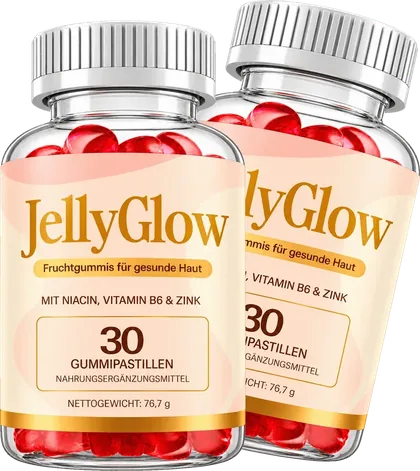
JellyGlow Gummies maca hormones is a fair question, and the honest answer is that the sources we hold do not show that maca changes hormones in a settled way. Each gummy lists 195 mg of maca root 20:1 extract, the largest active on the label1.
That amount matters because maca is the ingredient people most often connect with hormones. This post explains what the research rates as limited, which side effects have been reported, and which readers should speak to a doctor before they start. We are an independent information site, not the maker or seller, and nothing here says what JellyGlow will do for you.
01What does the JellyGlow Gummies label say about maca?
The label lists maca root 20:1 extract at 195 mg per gummy, with no daily reference value, and it makes no statement about hormones1. The same panel gives the other plant extracts at 1 to 2 mg each.
The claims shown on the seller page we read are about niacin, zinc and vitamin B6. None of them names maca2. So when a reader asks whether the gummy acts on hormones, the printed material gives no such statement to check.
The ingredient list places maca fourth, right after glucose syrup, water and sugar1. Our maca page covers the amount, the 20:1 ratio and the origin in detail. This post stays on the hormone question.
02What does research say about maca and hormones?
Research on maca in people is thin. Memorial Sloan Kettering describes only a few small human trials and rates the evidence for sexual function and menopausal symptoms as limited3.
That wording matters. Limited evidence means no one can say reliably that maca shifts hormone levels, and a small trial cannot settle a question about hormones in general.
It also notes that maca may interfere with testosterone lab tests3. That is a test result issue, not a statement about what happens in your body. It still matters if you have blood work planned, because a result that looks odd could trace back to a supplement you forgot to mention.
None of this describes JellyGlow itself. The source studies maca as a plant, and the amount and form in a gummy may differ.
03Which maca effects have been reported?
Reports exist, but they are mixed. The patient section of the Sloan Kettering page says side effects were not reported, while the clinician section lists a handful of them3.
The clinician list covers:
- Changes in the menstrual cycle.
- Moodiness.
- Cramps.
- Stomach irritation.
- Trouble sleeping.
These come from a source that calls the human evidence limited, so read them as things to watch for, not as predictions. If you notice any of them, tell your doctor or pharmacist and keep the jar and its label for reference.
The gummy also holds ginseng, and the NCCIH names insomnia as ginseng's most common side effect4. At 2 mg of extract, the ginseng amount is small, but sleep complaints could have more than one source.
04Who should ask a doctor before using JellyGlow Gummies?
Anyone with a hormone-sensitive condition, a pregnancy, a nursing plan or regular medicine should ask a doctor or pharmacist first. The label says the same: consult a physician if you take medication or have a medical condition1.
| Your situation | Why it comes up | What to do |
|---|---|---|
| Breast or uterine cancer history | Sloan Kettering says to talk to a provider about maca if you have a hormone-sensitive cancer3 | Ask your oncology team before use |
| Pregnant or nursing | Maca may not be safe, and the label rules these groups out3 | Do not use; ask your doctor |
| Takes losartan | In rats, maca made losartan's effect stronger; relevance to people is unknown3 | Ask your pharmacist |
| Hormone tests coming up | Maca may interfere with testosterone lab tests3 | Tell the clinician who orders the test |
Never stop or change a prescribed medicine on your own. Our medicines page lists the other interaction flags, and the who it is for page lists every ask-first group.
05What can you do to check before you order?
Write down every supplement and medicine you take, then show the list and the JellyGlow label to a pharmacist. That single step covers most of the risk, because the question is about interactions and your own history, not about one ingredient alone.
You can also ask the order desk for anything the label does not state, such as the full extract specification. Orders and questions go to helpdesk@digistore24.ie or +1 (302) 200-34805. We could not confirm that US delivery is offered, so check the country list at the live checkout.
If you decide to look at the live page, see the live price there and confirm the total. For a wider view of safety, read our safety page. If something feels wrong after a gummy, stop and get help, and you can report it through the FDA's MedWatch program6.
Safety: JellyGlow is for adults 18 and over. The label says it is not for pregnant or nursing women. Its vitamins add up with other supplements, and it lists botanicals with limited safety data, including ginseng and L-citrulline, which can matter with medicines for blood sugar, blood pressure or erectile dysfunction. If you have a medical condition or take any medicine, ask your doctor or pharmacist before use. Never change a prescribed medicine on your own. Stop and get medical help for a severe rash, swelling, trouble breathing, fainting, or yellow skin or eyes.
Frequently asked questions
Is there proof that JellyGlow Gummies maca shifts hormone levels?
No. The sources we hold do not show that it does. Sloan Kettering rates the human evidence on maca as limited, and nothing printed on the JellyGlow label or seller page claims a hormone effect.
Can I use JellyGlow Gummies if I have a hormone-sensitive cancer?
Ask your doctor first. Sloan Kettering advises talking to a provider about maca if you have a hormone-sensitive cancer such as breast or uterine cancer.
Could the maca in JellyGlow Gummies affect a hormone blood test?
It might. Sloan Kettering says maca may interfere with testosterone lab tests, so tell the clinician who orders the test about every supplement you take.
Is the JellyGlow maca amount of 195 mg a hormone dose?
No source we hold calls it a hormone dose. It is the amount of a 20:1 extract listed on the label, and the label states no hormone purpose.