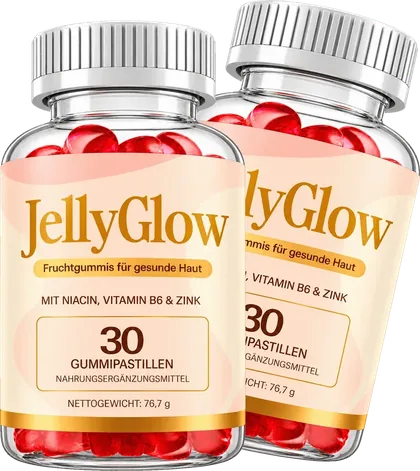
The JellyGlow Gummies sugar content is not printed on the label we hold: the wrap lists glucose syrup and sugar as ingredients but gives no grams of sugar and no calories per gummy1. So no one can quote an exact figure from that label.
This post takes a practical angle. Instead of repeating the ingredient list, it shows how far simple arithmetic can take you, where it stops, and the exact questions to send the order desk. We are an independent information site, not the maker or seller.
01What is known about sugar in JellyGlow Gummies?
Three facts are known: the first ingredient is glucose syrup, the third is sugar, and the whole jar weighs 76.7 g for 30 gummies1. Everything else about the sugar amount is missing.
Ingredients are listed in order of weight, so two sweeteners in the first three places means sugars make up a large part of each gummy. The FDA counts both table sugar and syrups as added sugars2.
| Question | Can the label we hold answer it? |
|---|---|
| Which sweeteners are used? | Yes: glucose syrup and sugar1 |
| Is a low-calorie sweetener listed? | No such ingredient appears1 |
| Grams of sugar per gummy? | No, not printed |
| Calories per gummy? | No, not printed |
| Added sugars as a share of the Daily Value? | No, not printed |
A longer breakdown sits on our sugar page.
02How can you estimate the sugar in one gummy?
You can set an upper limit, not an exact number. Divide the net weight by the count: 76.7 g across 30 gummies is about 2.6 g per gummy, by our arithmetic.
Sugar, syrup, water, pectin, extracts and vitamins all fit inside that weight. So the sugar in one gummy cannot exceed about 2.6 g, and it is certainly less, because the other ingredients take up room.
Against the US Daily Value for added sugars of 50 g2, that ceiling works out to no more than about 5% per gummy. That is our own calculation from two numbers, not a label statement, and the real share is lower. Use it only to see the scale of the number, not to log a diet entry.
One gummy a day is the label's directions1. If you also eat sweets, drinks and desserts, the gummy is one small line in a longer daily total.
03What does the sugar mean if you have diabetes?
If you have diabetes, the sugar amount is a number you should count, and you should ask your doctor or pharmacist before use. The label asks anyone with a medical condition to consult a physician1.
Two reasons make this worth a conversation:
- The sugar grams are unknown, so you cannot add them to a meal plan yet.
- Panax ginseng, present at 2 mg of extract per gummy, may lower blood sugar, and the NCCIH advises people with diabetes to ask first3.
The ginseng amount is small. The source speaks about ginseng in general, not about this gummy. Still, a person who uses blood sugar medicine should not guess. Never change a prescribed dose because of a supplement; ask your care team how to fit one in.
Our safety page lists the other groups who should ask first.
04What should you ask the order desk?
Ask for the complete supplement facts panel, because that is the document that states sugar per gummy. The seller page we read does not give it either4.
Orders and questions go to helpdesk@digistore24.ie or +1 (302) 200-34805. A short message works:
- State the pack and the jar you are asking about.
- Ask for grams of total sugars and added sugars per gummy.
- Ask for calories and carbohydrates per gummy.
- Ask whether any sweetener not listed on the wrap is used.
Keep the reply with your order records, along with a photo of the jar base that shows the lot code and best-before date. If the answer differs from the jar in your hands, trust the jar and ask again.
We could not confirm that the seller ships to US addresses, so confirm the country list at the live checkout. When you are ready, see the live price and check the total there.
05Is the gummy sugar free or sweetened only a little?
Neither claim can be made from the label. The gummy is not sugar free, because sugar and glucose syrup are listed, and nothing shows it to be low in sugar either, because no grams are shown1.
The wrap does show a gelling agent, pectin, and a glaze of carnauba wax. Those are texture ingredients, not sweeteners1.
Regard the gummy as a sweet product of unknown sugar content until the seller sends the numbers. Food supplements are also not a substitute for a varied and balanced diet, as the capitals block on the wrap states1. For the full label, see the ingredients page.
Safety: JellyGlow is for adults 18 and over. The label says it is not for pregnant or nursing women. Its vitamins add up with other supplements, and it lists botanicals with limited safety data, including ginseng and L-citrulline, which can matter with medicines for blood sugar, blood pressure or erectile dysfunction. If you have a medical condition or take any medicine, ask your doctor or pharmacist before use. Never change a prescribed medicine on your own. Stop and get medical help for a severe rash, swelling, trouble breathing, fainting, or yellow skin or eyes.
Frequently asked questions
What is the exact JellyGlow Gummies sugar content per gummy?
It is not printed on the label we hold, so we cannot state it. The label lists glucose syrup and sugar but gives no grams; ask the order desk for the full panel.
Is the JellyGlow Gummies sugar content more than 2.6 g per gummy?
No. By our arithmetic, a gummy weighs about 2.6 g on average (76.7 g across 30), and sugar is only part of that weight, so it must be lower.
Does the JellyGlow sugar count as added sugar?
Yes, in the FDA's description. Sugar and syrups such as glucose syrup are added sugars, though the label gives no gram figure to compare with the 50 g Daily Value.
Should I check JellyGlow sugar with a doctor if I have diabetes?
Yes. The label asks anyone with a medical condition to consult a physician, and the ginseng in the gummy may lower blood sugar, so ask your doctor or pharmacist first.